Source Casement Window Handles for Offices, Buildings, and Homes
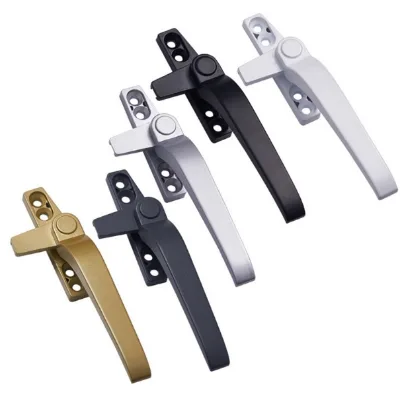
Explore 30 casement window handles made from aluminum and stainless steel with surface treatments like paint and powder coating. Buyers can compare models such as WH-115 and CZS14 for office buildings and general building applications with customization options available.
Key considerations
Products List




Comprehensive Sourcing Guide
Strategic Sourcing Guide for Casement Window Handles
Understanding Product Variability and Material Composition
When sourcing casement window handles, buyers must first recognize that the market is not monolithic; it is defined by distinct material compositions and surface treatments that dictate performance and longevity. The available inventory reveals a clear divergence between aluminum-based solutions and stainless steel alternatives. Aluminum and Aluminum Alloy products are frequently cited as primary construction materials, offering a balance of lightweight durability and cost-effectiveness suitable for general applications. In contrast, Stainless Steel options provide enhanced corrosion resistance, which is critical for environments with high humidity or exposure to salt air.
The surface finish is equally critical to the product's aesthetic and functional lifespan. Observed data indicates that "Paint" and "Powder Coating" are the dominant finishing processes. Powder coating is generally preferred for its superior adhesion and resistance to chipping compared to standard paint, though both are valid depending on the specific environmental requirements of the installation. The choice of material and finish directly influences the handle's weight and tactile feel. For instance, specific tubular designs are noted to weigh approximately 228 grams, a metric that buyers should use as a benchmark for quality perception rather than a universal standard for all units.
Buyers should verify the specific alloy grade for aluminum products and the steel grade for stainless options, as these are not always explicitly detailed in general listings. The distinction between "Aluminum" and "Aluminum Alloy" suggests variations in tensile strength and machinability that can affect the handle's ability to withstand repeated torque without deformation. When evaluating suppliers, request technical data sheets that specify the exact alloy composition and the thickness of the powder coating or paint layer to ensure the product meets the intended durability standards.
Technical Specifications and Dimensional Standards
Precision in dimensions is paramount for casement window handles, as they must interface seamlessly with existing window frames and locking mechanisms. The product landscape includes a wide array of model numbers, such as W-115, WH-119, WH-114, WH101, WH1021, WH1020, WH1015, CZS14, CZS06, CZS05, and MZS19. This proliferation of models indicates a highly customized market where off-the-shelf solutions may not fit every window profile.
Dimensional specifications vary significantly across these models. Standardized tube diameters are observed in the range of 19mm to 22mm, which is a crucial metric for ensuring compatibility with the window's spindle. Door thickness compatibility is another vital parameter, with observed ranges spanning from 35mm to 60mm, or accommodating special requests. This variability means that a single handle model cannot be assumed to fit all window types; buyers must cross-reference their specific window frame thickness and spindle diameter against the supplier's technical data.
Furthermore, specific standard dimensions are noted for certain models, such as 125mm, 130mm, 135mm, and 140mm, as well as rectangular profiles measuring 130mm by 70mm. Other models adhere to metric standards like 0.35m x 0.28m x 0.29m or 0.39.5m x 0.385m x 0.12m, though these larger dimensions may refer to packaging or specific large-scale hardware configurations rather than the handle itself. Length specifications for certain tubular components are recorded between 10cm and 15cm.
Buyers must treat these numerical values as observations of specific SKUs rather than universal industry standards. When engaging with suppliers, the primary technical verification should focus on the spindle diameter and the mounting hole spacing. A mismatch in these dimensions can render a handle unusable, regardless of its aesthetic appeal. It is essential to obtain a physical sample or a detailed CAD drawing before placing a bulk order to confirm that the handle's geometry aligns with the window manufacturer's specifications.
Compliance, Certification, and Safety Standards
In the B2B procurement of window hardware, compliance with international safety and environmental standards is non-negotiable. The available product data highlights that certain models carry certifications including CE, ISO, and RoHS. These certifications serve as indicators that the manufacturer adheres to specific European safety directives, international quality management systems, and restrictions on hazardous substances, respectively.
The CE marking is particularly significant for products intended for the European market, signifying that the handle meets health, safety, and environmental protection requirements. ISO certification implies a commitment to consistent quality management processes, which can reduce the risk of production defects. RoHS compliance ensures that the materials used, particularly in the metal alloys and surface coatings, do not contain excessive levels of lead, mercury, cadmium, or other restricted substances, which is a critical requirement for modern environmental regulations.
However, buyers must exercise caution and not assume that every listed product possesses these certifications. The presence of these marks in the data should be treated as a feature of specific high-compliance SKUs. When sourcing, procurement teams should explicitly request proof of certification for the specific batch of goods being ordered. This includes valid certificate numbers and the issuing authority. Relying on a supplier's verbal assurance without documented proof can lead to customs delays or legal liabilities in the destination market.
Additionally, the "Standard" attribute in the product data includes entries like "56.5*109" and "other," which suggests that some products may not adhere to a single, universally recognized standard but rather to a custom or proprietary specification. In such cases, the buyer must define the acceptance criteria based on the intended application. For building and office building applications, where safety is paramount, adherence to recognized standards like CE is essential. For less critical applications, the "other" category might suffice, provided the functional performance is verified through testing.
Cost Drivers and Pricing Dynamics
The pricing structure for casement window handles is influenced by a complex interplay of material costs, customization levels, and order volume. The observed price range in the market spans from $0.29 to $5.00 USD, a wide variance that reflects differences in material quality, finish complexity, and branding. Lower-priced items in this range typically correspond to basic aluminum models with standard paint finishes and minimal customization. Conversely, the upper end of the spectrum likely includes stainless steel options, powder-coated finishes, or highly customized designs that require additional tooling and labor.
Order Volume is a primary driver of unit cost. The Minimum Order Quantity (MOQ) ranges from as low as 2 units to as high as 5,000 units. This flexibility allows buyers to source small batches for prototyping or replacement needs, while bulk orders can significantly reduce the per-unit cost. However, the data also indicates that some suppliers enforce a strict MOQ of 1,000 pieces, which can be a barrier for smaller procurement projects. Buyers must align their order quantity with the supplier's MOQ policy to avoid unexpected costs or order rejection.
Customization is another significant cost factor. The availability of "Customized" options and "OEM" (Original Equipment Manufacturer) services allows buyers to tailor the handle's design, color, and branding. While this adds value, it inevitably increases the unit price and may extend the lead time. The "Color: Customized Accepted" attribute suggests that buyers can request specific RAL colors or finishes, but this requires a separate production run or a minimum order threshold to be economically viable.
Lead times also impact the overall cost of procurement. A standard delivery time of 35 days after payment is observed, which buyers must factor into their supply chain planning. Rush orders or expedited shipping will likely incur additional charges. Furthermore, the packaging method, ranging from simple "Carton" to "Clean Poly Bags+White Box+Export Carton+Pallet," affects the final cost. More robust packaging increases protection but adds material and labor expenses. Buyers should evaluate the total landed cost, including packaging and logistics, rather than focusing solely on the base unit price.
Supplier Evaluation and Application Context
Selecting the right supplier requires a deep understanding of the intended application and the supplier's capability to meet specific demands. The product data indicates that these handles are designed for "Office Building" and general "Building" applications, with a specific "Usage: Door" classification for some models. This suggests a versatility that spans residential, commercial, and institutional settings. The "Style" attributes, including "Modern" and "Country Style," highlight the aesthetic flexibility required by different architectural designs.
When evaluating suppliers, buyers should prioritize those who offer "Sample: Free" services. This allows for a physical assessment of the product's quality, finish, and functionality before committing to a large order. The ability to provide samples is a strong indicator of a supplier's confidence in their product and their willingness to engage in a transparent procurement process. Additionally, the "Installation Type: Surface Installation" specification informs the buyer about the mounting requirements, which can simplify the installation process for contractors.
The origin of the products is another critical factor. The data points to "China" and specifically "Jiangmen, Guangdong, China" as key manufacturing hubs. Guangdong is a well-established region for hardware manufacturing, known for its supply chain efficiency and competitive pricing. However, buyers should verify the specific factory location and capacity to ensure the supplier can meet volume requirements and maintain consistent quality. The "Customization: Available" and "OEM: Welcome" attributes suggest that many suppliers in this region are experienced in handling bespoke orders, which is beneficial for buyers with unique design requirements.
Buyers should also consider the "Accessory: No" attribute, which implies that the handles are sold as standalone units without additional mounting hardware or keys. This necessitates a separate procurement of accessories, which can complicate the supply chain if not planned in advance. A comprehensive supplier evaluation should include a review of their ability to provide a complete solution, including any necessary mounting kits or keys, to ensure a seamless installation process.
Quality Control and Long-Term Procurement Strategy
Ensuring long-term reliability requires a robust quality control (QC) strategy that goes beyond simple visual inspection. Given the wide range of materials and finishes, buyers should implement a multi-stage QC process. This includes verifying the material composition upon receipt, testing the surface finish for adhesion and corrosion resistance, and conducting functional tests to ensure the handle operates smoothly over repeated cycles. The "Lock: Without Lock" attribute indicates that some handles are purely aesthetic or functional for opening only, while others may integrate locking mechanisms. Buyers must clearly define their functional requirements to avoid purchasing incompatible products.
For long-term procurement, establishing a partnership with a supplier who offers consistent quality and reliable lead times is essential. The "Delivery Time: Shipped in 35 Days After Payment" serves as a baseline, but buyers should negotiate terms that allow for flexibility in case of supply chain disruptions. Regular audits of the supplier's production process can help identify potential quality issues before they affect the final product. Additionally, maintaining a buffer stock of critical components can mitigate the risk of production delays.
Buyers should also consider the lifecycle of the product. Handles are subject to frequent use and environmental exposure, making durability a key factor. Selecting products with high-quality finishes like powder coating and robust materials like stainless steel can extend the service life and reduce maintenance costs. The "Weight: 228 G" specification for certain models can serve as a proxy for build quality; lighter handles may indicate thinner gauge materials that are more prone to wear and tear.
Finally, buyers should maintain open communication with suppliers regarding any changes in design or material availability. The "Special Request" option for door thickness and the "Customized" nature of many products suggest that the market is dynamic. Staying informed about these changes allows buyers to adapt their procurement strategies and ensure that their window hardware remains compatible with evolving building standards and design trends. By focusing on these strategic elements, buyers can secure a reliable supply of high-quality casement window handles that meet their specific project needs.
FAQs
What materials are used for casement window handles?
Casement window handles are primarily made from aluminum, aluminum alloy, or stainless steel. Aluminum offers lightweight durability, while stainless steel provides enhanced corrosion resistance for humid environments.
Which surface treatments are available for these handles?
The available surface treatments include paint and powder coating. Powder coating is generally preferred for superior adhesion and chipping resistance compared to standard paint finishes.
Can I customize the color and design of the handles?
Yes, customization is available with customized colors and OEM services accepted. Buyers can request specific designs, though this may require meeting a minimum order quantity threshold.
What is the typical delivery time for these products?
The standard delivery time is 35 days after payment. Buyers should factor this lead time into their supply chain planning and account for potential delays with rush orders.
Which certifications do these window handles typically have?
Some models carry CE, ISO, and RoHS certifications. These marks indicate compliance with European safety directives, international quality management, and restrictions on hazardous substances.
How do I determine the correct tube diameter for my window?
The observed tube diameter range is 19mm to 22mm. Buyers must verify their specific window spindle diameter against these values to ensure a proper fit.
What is the minimum order quantity for purchasing handles?
The minimum order quantity ranges from 2 to 5000 units depending on the supplier. Some suppliers enforce a strict MOQ of 1000 pieces for customized orders.
Where are these casement window handles manufactured?
Products originate from China, specifically Jiangmen, Guangdong. This region is a known manufacturing hub for hardware with established supply chain efficiency.